
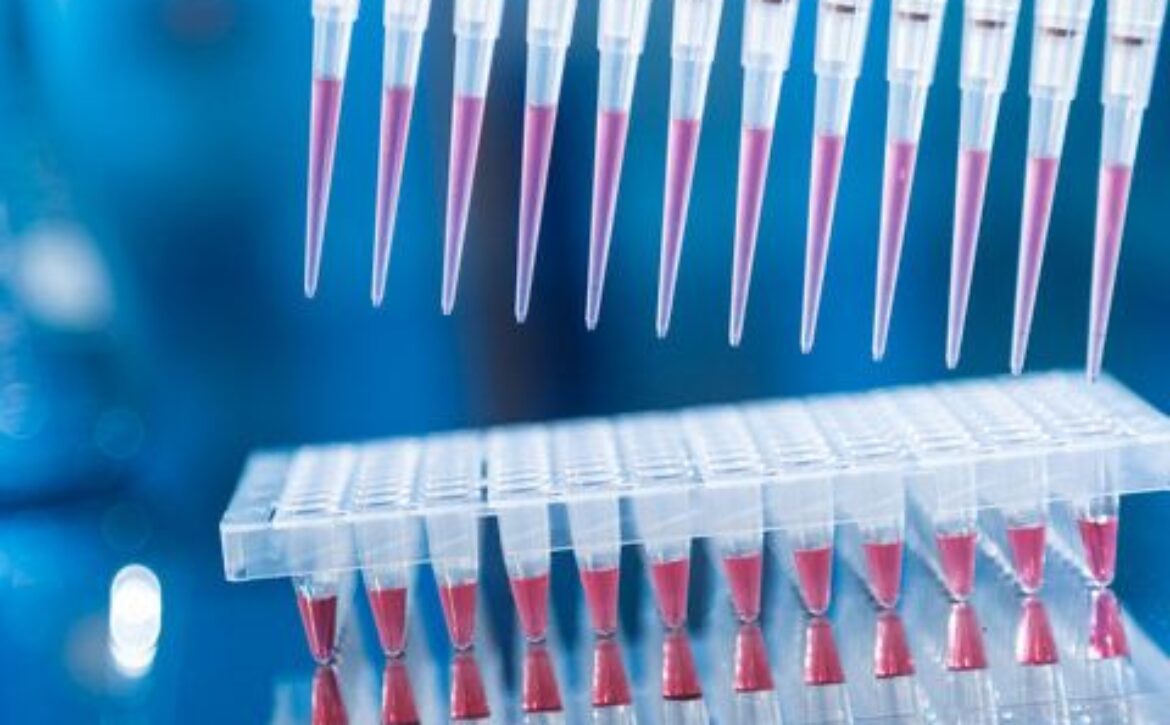
LAMP Assay: A Game-Changer in Molecular Diagnostics
The Loop-Mediated Isothermal Amplification (LAMP) assay has emerged as a breakthrough in molecular diagnostics, offering an efficient and cost-effective alternative to conventional PCR-based methods. Unlike traditional PCR, which requires temperature cycling, LAMP operates under constant temperature, making it simpler, faster, and more accessible in resource-limited settings. This is particularly valuable in the diagnosis of infectious diseases, where rapid and accurate detection is crucial.
One of the key advantages of LAMP is its high specificity and sensitivity. The assay amplifies DNA with the help of a set of primers that target specific regions of the pathogen’s genome. Additionally, it can be integrated with various detection methods, such as turbidity, fluorescence, or color change, providing immediate results. LAMP has already been employed for detecting pathogens such as Zika virus, tuberculosis, and SARS-CoV-2, demonstrating its potential in clinical diagnostics.
The future of LAMP technology looks promising, with ongoing research focused on improving its efficiency, scalability, and application in various fields such as environmental monitoring, food safety, and personalized medicine. Researchers are also working on developing portable devices that can perform LAMP assays in the field, making it a game-changer for point-of-care diagnostics.
References:
- Notomi, T., et al. (2000). “Loop-mediated isothermal amplification of DNA.” Nucleic Acids Research.
- Parida, M., et al. (2008). “Real-time reverse-transcription loop-mediated isothermal amplification for rapid detection of SARS coronavirus.” Journal of Clinical Microbiology.
- Jain, P., et al. (2021). “Advancements in LAMP assay technology for point-of-care diagnostics.” Journal of Medical Microbiology.
- Khatami, S., et al. (2022). “LAMP Assay for rapid detection of infectious diseases.” Trends in Molecular Medicine.